
18 Home Office Decor Ideas for a Stylish Home
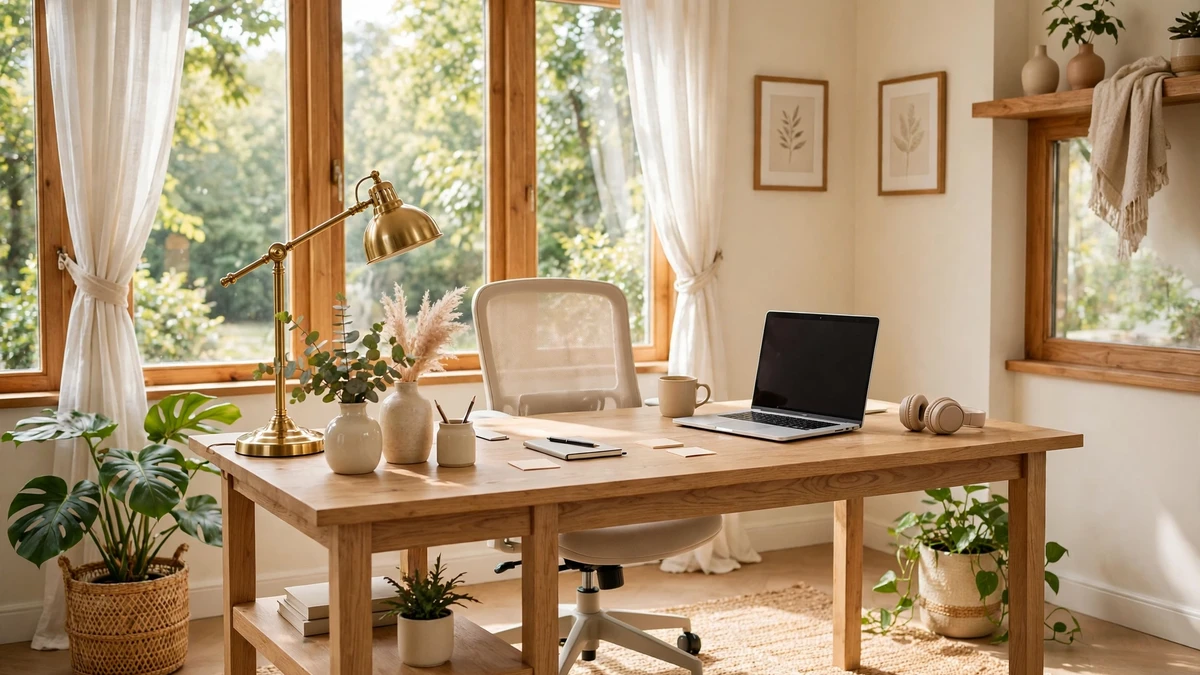
A spare corner can become the hardest working room in your house, and these home office decor ideas for a stylish home show how to shape a workspace that feels calm, focused, and genuinely pleasant to sit in each morning. Many people work from a kitchen table or a cramped desk because they think a proper office needs a spare room and a large budget. It does not. With a good chair, warm light, and a few thoughtful layers, even a small nook can support deep work and video calls. This guide shares 18 practical ideas for desks, storage, lighting, colour, and personal touches that suit beginners and renters alike. In my experience, the offices people love most are not the most expensive ones, they are the ones where every item earns its place. Pick one idea, try it this weekend, and let your workspace start working for you.
Floating Desk Setup
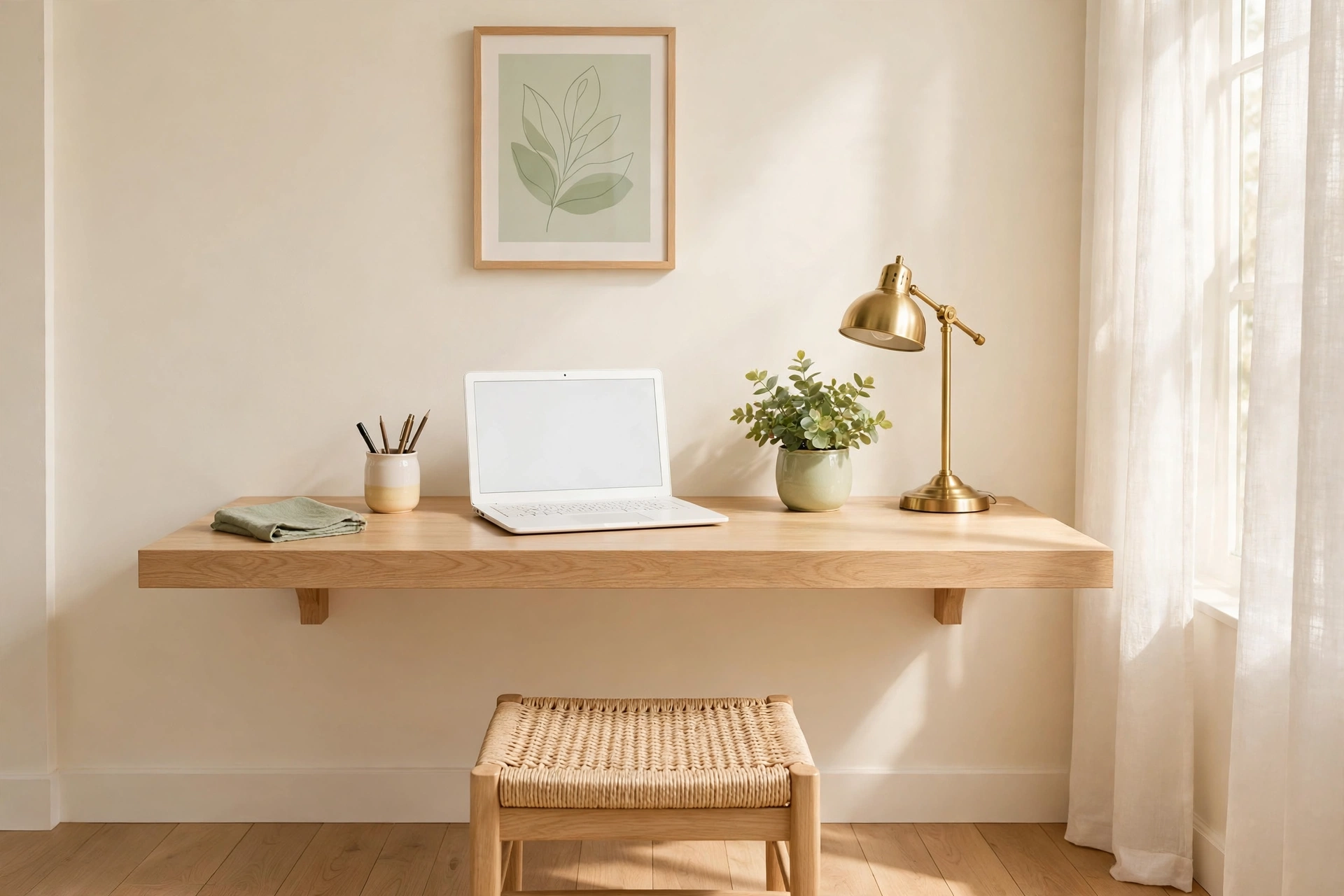
A desk that floats on the wall frees up floor space and makes even a tiny alcove feel open. Mount a solid oak shelf at elbow height, about 74 cm from the floor, and keep the depth near 60 cm so a laptop and a notebook fit side by side. Add two hidden brackets rated for at least 30 kg, because a wobbly desk will ruin your focus faster than any clutter.
Leave the space below the desk completely clear so your chair tucks in fully and your legs stretch out. A small drawer unit on wheels can hold supplies and slide away when you need room. Floating desks suit renters too when you use sturdy removable brackets and patch the holes later, so do not let a small room stop you from claiming a proper workspace.
READ MORE
- 15 Home Decor Ideas DIY Projects for a Cozy Home
- 21 Home Decor Kitchen Ideas for a Stylish Home
- 19 Crochet Home Decor Projects for a Cozy Home
Ergonomic Chair Comfort
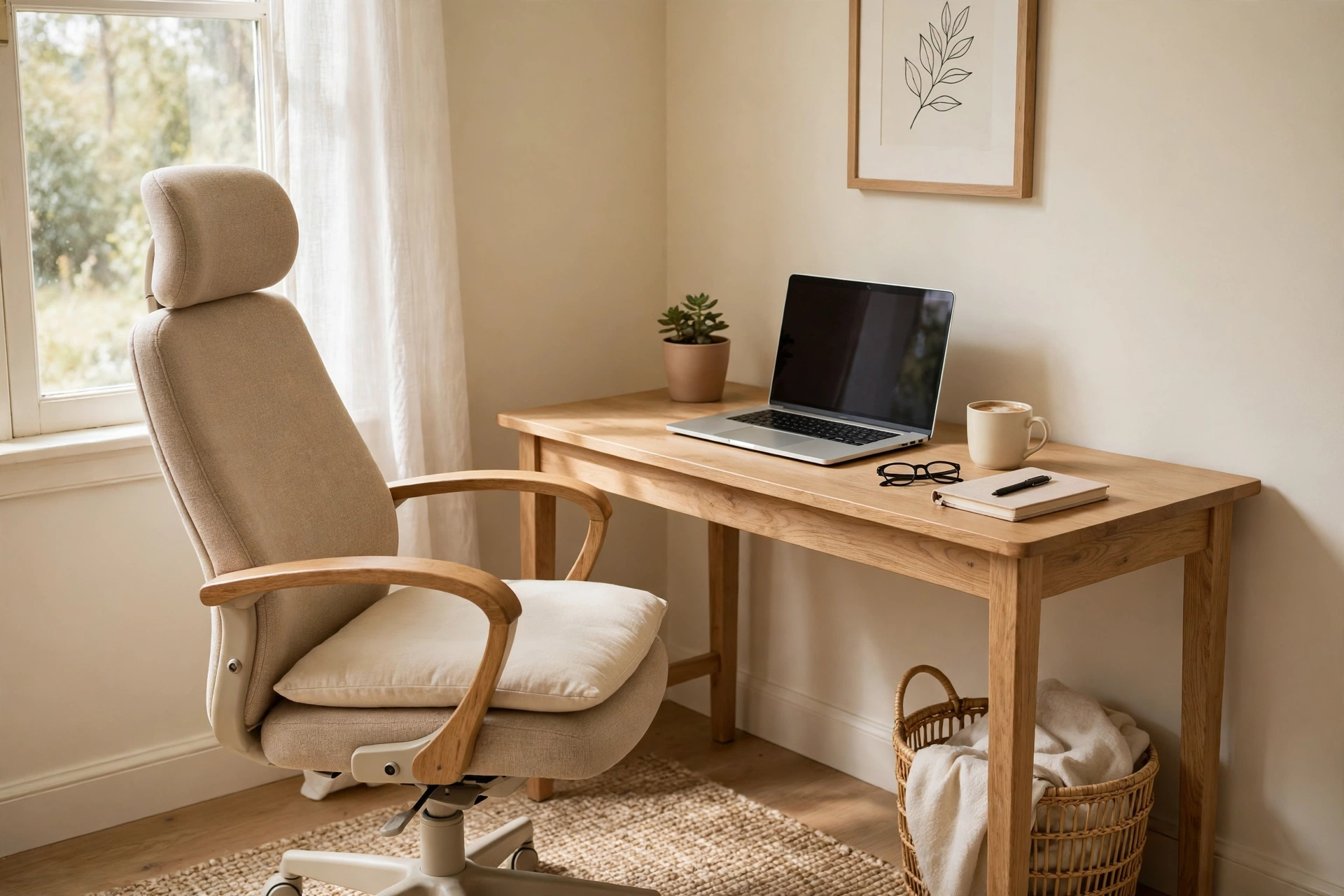
- Your feet should rest flat on the floor with knees at a right angle, so adjust the seat height first before touching anything else.
- Lumbar support belongs in the small of your back, and a rolled towel works well if your chair lacks a built in cushion.
- Armrests should let your shoulders relax, with elbows close to your body and forearms level with the desk.
- Sit back in the chair instead of perching on the edge, since leaning forward for hours strains your neck and shoulders.
- Stand and stretch for two minutes every hour, because even the best chair cannot replace movement.
Comfort is not a luxury when you sit for six or eight hours a day, it is the foundation of good work. A chair that fits your body keeps your energy steady, your posture relaxed, and your mind on the task instead of on an aching back. Test a chair for a full workday before you commit, since ten minutes in a shop tells you very little.
Warm Desk Lighting

Quick Tip: Place your desk lamp on the opposite side of your writing hand so your arm never casts a shadow across the page or keyboard. Choose a warm white bulb near 2700K and a lamp with an adjustable arm, so you can aim light at your work in the evening and soften it for video calls.
Good light changes how long you can work without tired eyes or a dull headache. Natural daylight should come from the side, not from behind your screen, and a warm lamp fills the gaps after sunset. I have noticed that a small pool of warm light makes a plain desk feel like a proper studio, even when nothing else in the room has changed.
Wall Shelf Storage
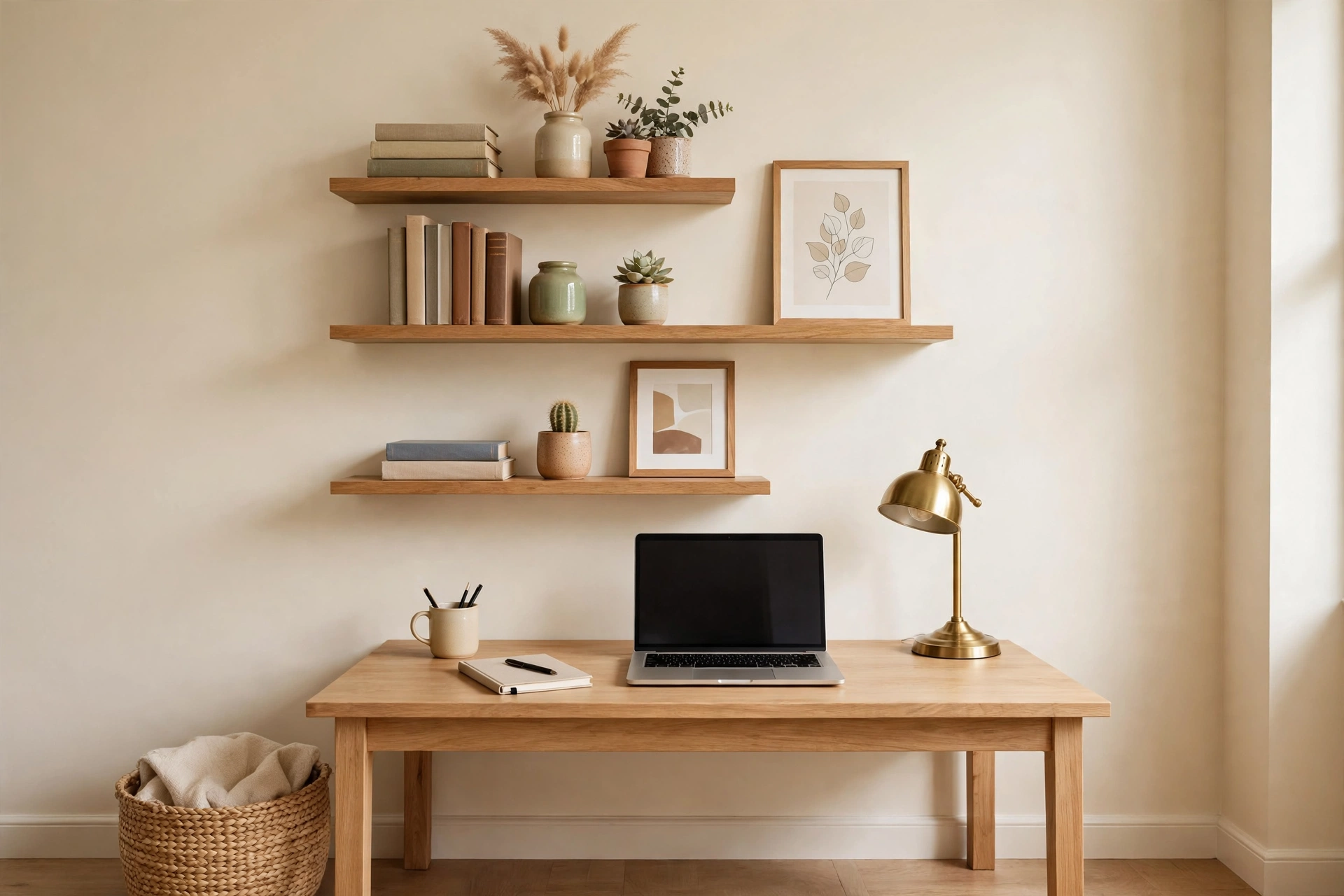
BEFORE: Papers, chargers, and notebooks piled across the desk until there was no clear space left to write. The wall above the desk sat bare, the drawers overflowed, and every work session started with five minutes of clearing clutter before any real work began.
AFTER: Two wooden shelves now hold books, jars, and plants above the desk, while the surface below stays clear for a laptop and a notebook. Supplies live within reach but off the worktop, and the room looks taller and calmer because the storage climbs the wall instead of spreading across the floor.
Shelves work best when each one has a single job, so give the lower shelf to daily supplies and the upper shelf to books and decor. Leave a third of each shelf empty, keep heavy books near the brackets, and dust the shelves weekly since open storage shows dust quickly. Your desk will thank you every morning.
Greenery Desk Accents

- Start with one easy plant, such as a pothos or snake plant, that tolerates low light and forgiving watering.
- Place a small succulent near the laptop where you will see it often, since tiny green notes lift your mood during long tasks.
- Add a taller plant in a woven basket beside the desk to soften the corner and add height to the room.
- Water all your plants on the same morning each week and rotate the pots monthly so they grow evenly.
- Keep a small watering can nearby so the routine takes two minutes instead of becoming a chore.
Plants bring life to a workspace that can otherwise feel flat and screen heavy, and they cost far less than new furniture. A trailing vine softens a hard shelf edge, a succulent adds colour to a plain desk, and a tall plant fills an empty corner without any building work. Start small, keep the routine simple, and let the green grow with you.
Neutral Office Palette
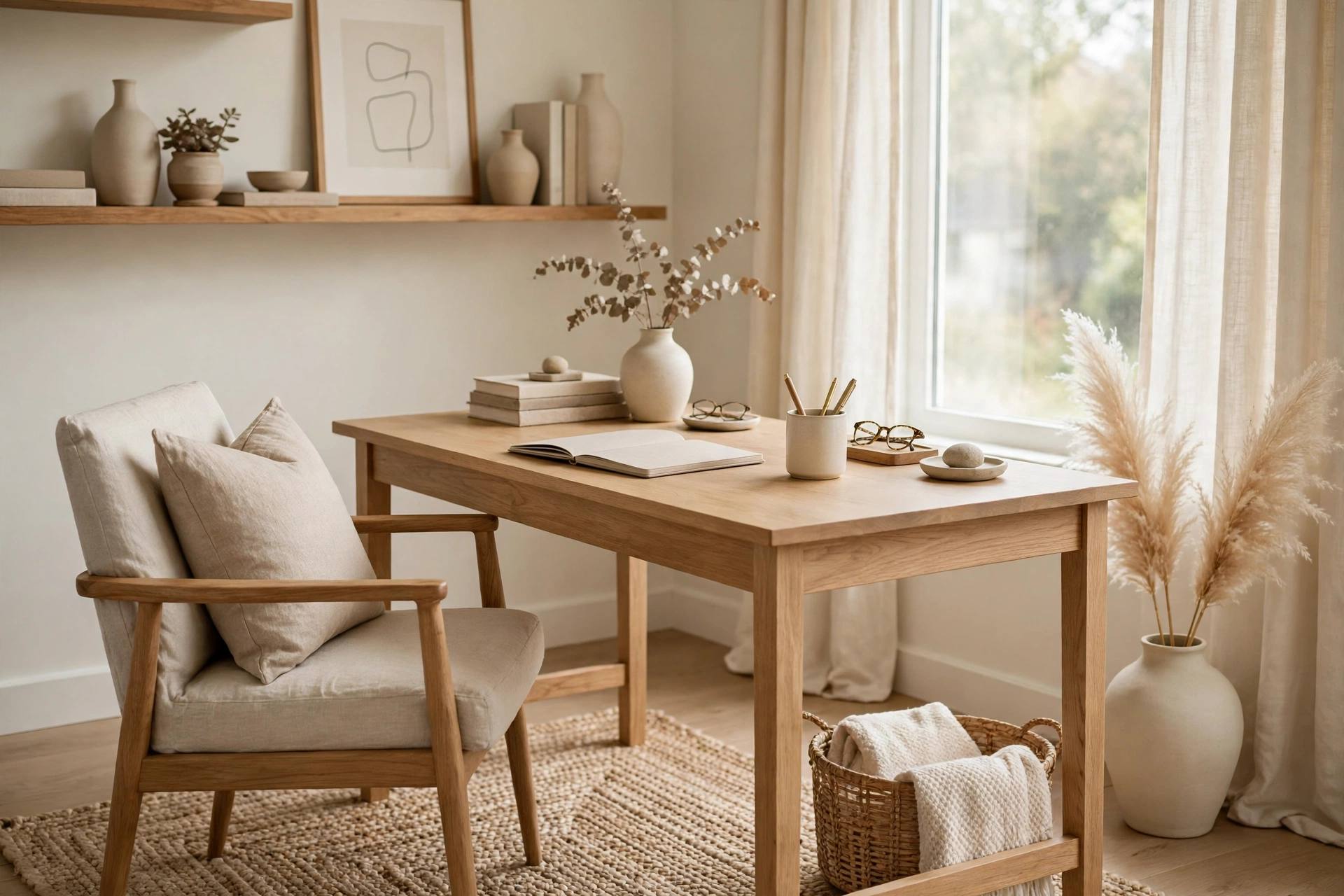
| Option | Best For | Feel |
|---|---|---|
| Warm white walls | Small rooms and dark corners | Bright, clean, open |
| Greige and beige tones | Desks, chairs, and soft furnishings | Calm, soft, grounded |
| Light oak accents | Shelves, frames, and desk tops | Natural, warm, timeless |
A quiet palette helps your mind settle, because nothing in the room competes with the work on your screen. Layer three or four neutrals instead of one flat shade, so ivory walls meet a beige chair, greige cushions, and a light oak desk. Each tone is gentle alone, but together they build depth and warmth.
Texture keeps a neutral office from feeling cold, so mix linen, wool, rattan, and wood rather than adding bold colour. A sage plant or a rust notebook breaks the calm just enough, and both can be swapped in minutes when you want a change. Neutral rooms also look tidy on camera, which matters for video calls.
Corkboard Inspiration Wall
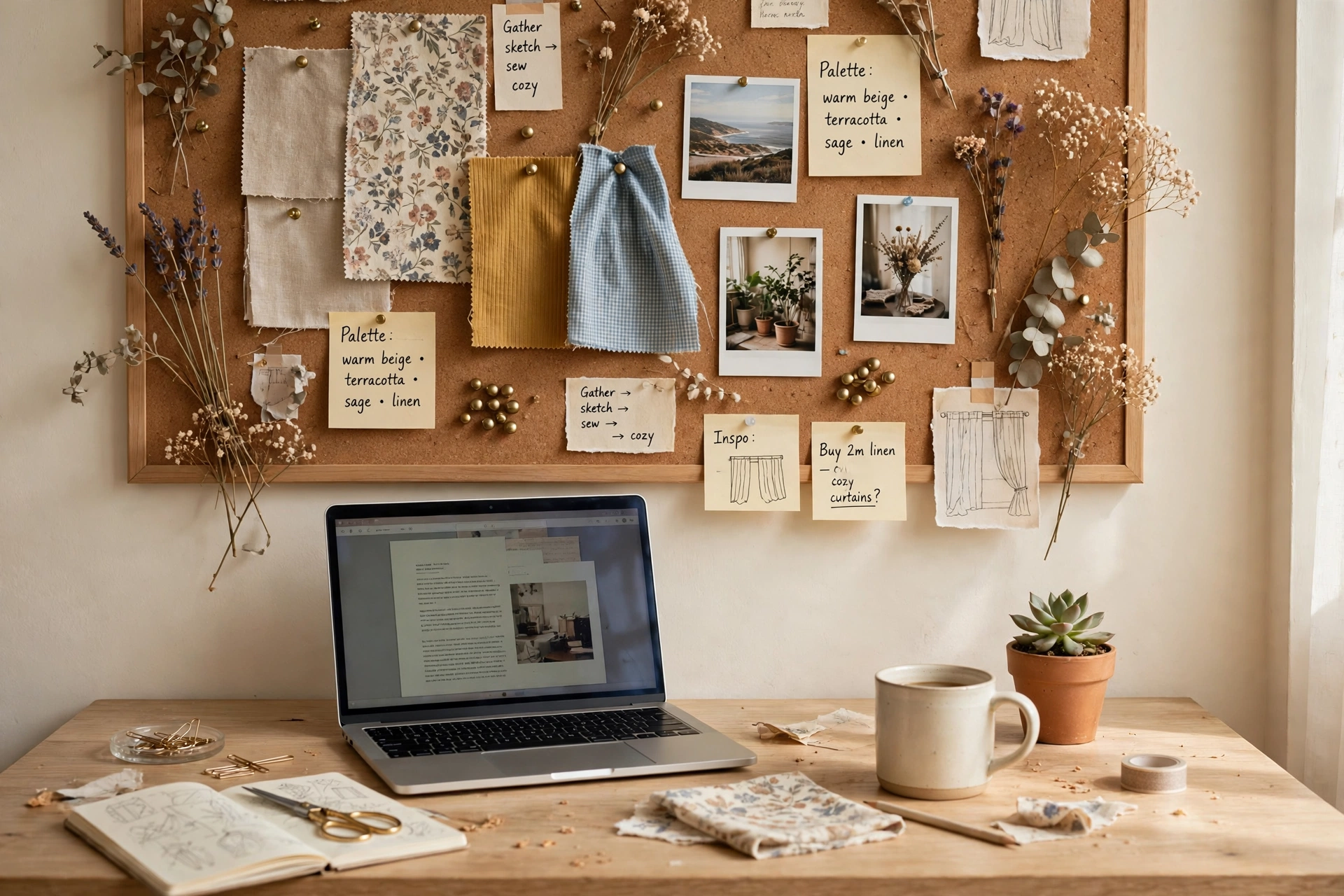
DO:
- Pin only the images and notes that genuinely inspire your current projects, and remove the rest.
- Mix paper, fabric, and photos so the board feels layered instead of flat and office like.
- Leave breathing space between pins, since a crowded board stops being inspiring and starts feeling noisy.
- Refresh one item each month so the wall keeps pace with your goals and seasons.
DON’T:
- Cover the whole board on day one, or you will have nowhere to add new ideas.
- Pin bills, deadlines, or stressful reminders where you look for calm and focus.
- Use pins that are hard to remove, because a board you cannot change quickly will go stale.
- Hang the board above eye level, since you will stop noticing it within a week.
An inspiration wall turns a blank stretch of plaster into a gentle nudge toward your best work. Photos from trips, colour swatches, and a kind note from a friend all belong here, while urgent paperwork belongs in a drawer. Step back once a week and notice which pinned items still spark energy, then swap the ones that no longer do.
Cable Management Solutions
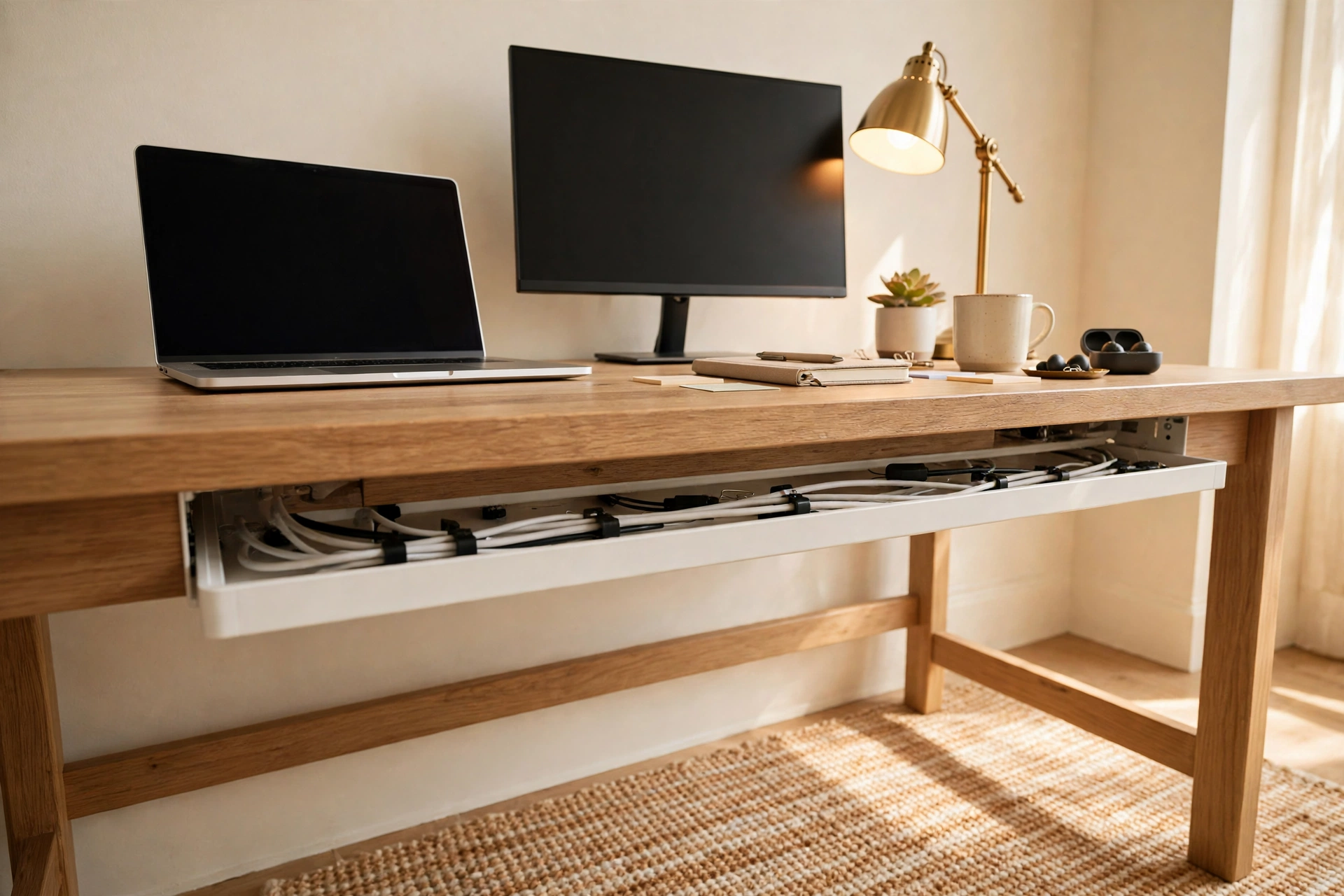
Cost: 10 to 40 dollars for a cable tray, clips, and ties Time: Under one hour to tidy a full desk setup Skill Level: Beginner, no tools needed beyond a screwdriver Best Room: Any home office desk, especially against a wall
Loose cables turn a stylish desk into a tangle that catches your feet and your attention. A tray screwed under the desk holds the power strip and spare cords out of sight, while small adhesive clips guide each cable along the desk edge to its device. Label both ends of every cord with a tiny tag, so unplugging one device never means tracing a mystery wire.
I have seen tidy cables change how a whole office feels, because the desk suddenly looks intentional instead of improvised. Bundle spare length with a velcro tie, keep phone chargers in a small basket, and check the tray monthly for cords you no longer use. A clear floor under your desk is a small daily pleasure.
Window Seat Workspace

Daylight is the cheapest upgrade any workspace can get, and a window seat puts it right where you work. Place your desk at a right angle to the window so light falls across your work instead of glaring into your screen. Add a thick cushion and two linen pillows to the sill or a bench, and the spot becomes a reading break zone between focused sessions.
Keep the window area simple so the view stays the star, with one plant and a small tray for tea. Sheer curtains soften harsh midday sun without blocking it, and a woven rug underfoot warms the floor on cold mornings. If your window faces a busy street, a tall plant on the sill gives privacy while still letting light through.
Art Above Desk

- Choose one large print as the anchor, about two thirds the width of your desk, so the wall feels intentional.
- Pick art in colours that already appear in your room, like sage, rust, or warm wood tones.
- Hang the centre of the artwork at eye level when seated, roughly 120 cm from the floor.
- Mix one framed print with a small shelf or a pinned photo to keep the wall from feeling like a gallery.
- Swap the print with the seasons if you like change, since a fresh image can reset a tired workspace.
Art above a desk does quiet work all day, giving your eyes a pleasant place to rest between tasks. A botanical print softens a plain wall, an abstract shape adds energy, and a personal photo reminds you why the work matters. Start with one piece you truly love, and let the wall grow slowly around it.
Personal Photo Corner
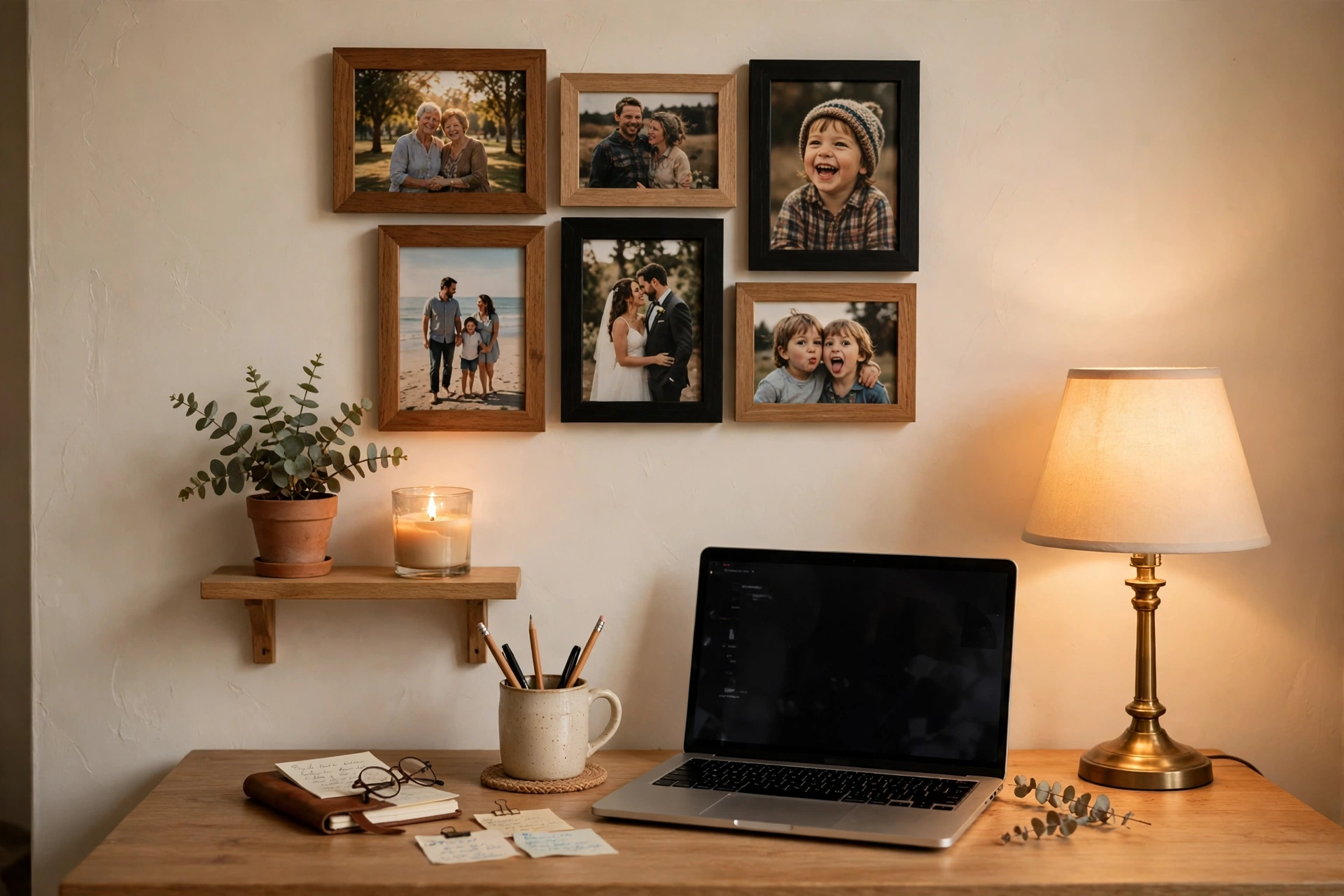
Quick Tip: Print your photos in one size, such as 13 by 18 cm, and use matching frames in two finishes, wood and black. Uniform sizes make a mixed collection of holidays, birthdays, and everyday moments look calm and intentional instead of chaotic. Replace one photo each season so the display keeps growing with your life.
Photos remind you of the people and places that matter most, which is a steady anchor during long workdays. A small shelf with three frames and a plant fits beside almost any desk, and it sparks good conversations on video calls when colleagues ask about the faces behind you. Keep the display small and meaningful, and it will never distract from your work.
Textured Rug Layer
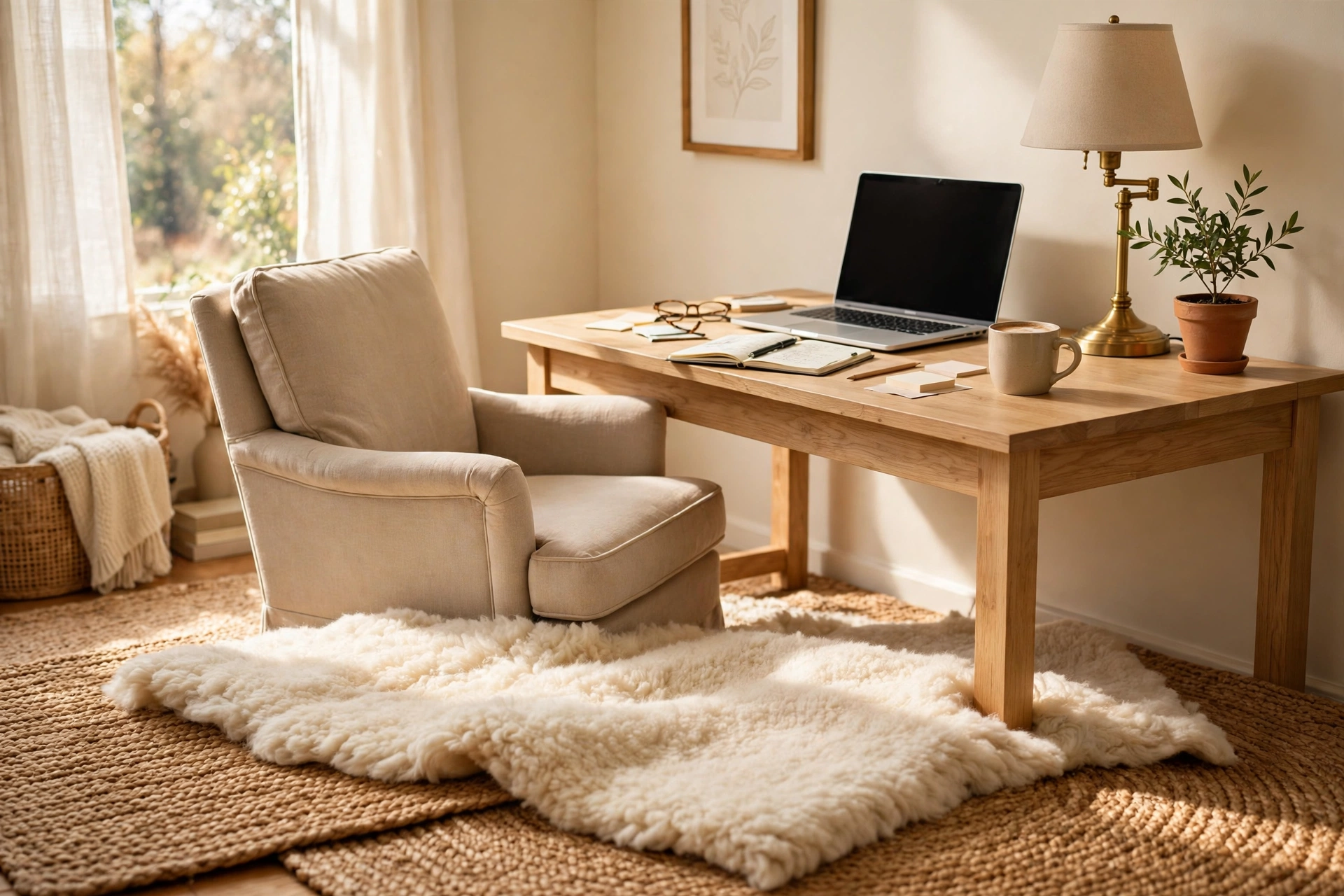
BEFORE: The desk sat on a bare wooden floor that felt cold underfoot and echoed every chair movement. The room looked finished from the doorway, yet sitting there for hours felt hard and a little unwelcoming, and the desk area blended into the rest of the room.
AFTER: A jute rug now defines the workspace, with a soft wool rug layered on top where feet rest. The chair rolls smoothly, the floor feels warm, and the desk zone reads as its own little room inside the larger space, even though nothing structural has changed at all.
Rugs also soften sound, which matters when you take calls or play music while you work. Choose a rug large enough for the chair to stay on it when you push back, and pick a flat weave under the desk so wheels move freely. Shake the rug outside weekly, and the whole office will feel fresher.
Vintage Desk Finds
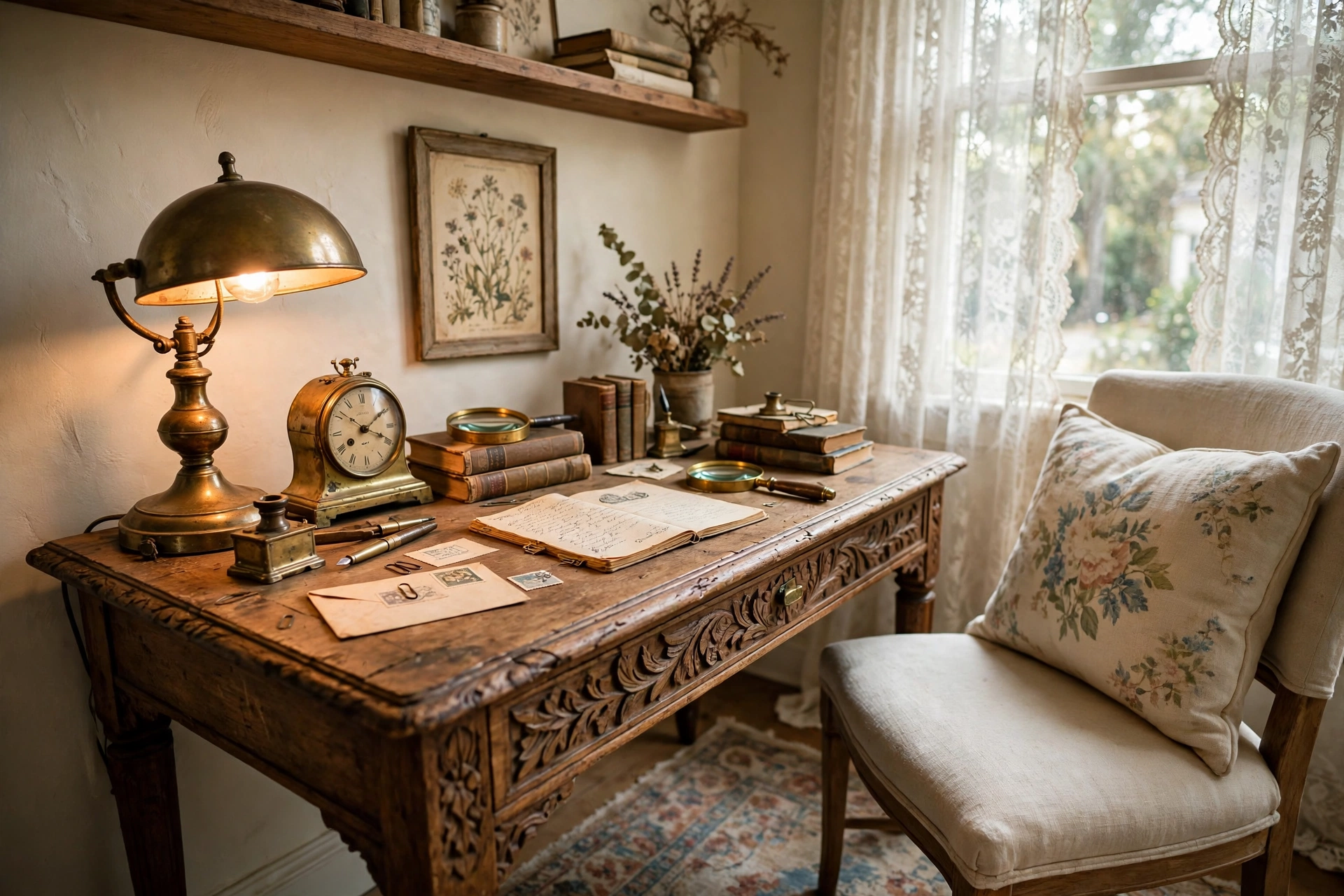
- Hunt for one strong vintage piece first, like an aged brass lamp or a carved wooden desk, instead of filling the room with small old objects.
- Check second hand shops and family attics before buying new, since patina cannot be faked convincingly.
- Pair vintage wood and brass with plain linen so the old pieces look intentional rather than cluttered.
- Limit vintage accents to three or four per room, which keeps the character without tipping into a museum feel.
- Clean brass gently with a soft cloth and avoid harsh polish that strips the aged finish.
Old pieces carry a story that new furniture rarely has, and a single aged lamp can set the tone for a whole office. The goal is contrast, not a full period look, so let one vintage clock or rug sit beside a modern laptop. That mix is what makes a workspace feel collected over years rather than decorated in a weekend.
Dual Monitor Display
| Option | Best For | Feel |
|---|---|---|
| Two matching monitors | Spreadsheets, writing, and research | Wide, balanced, efficient |
| Laptop plus one monitor | Small desks and flexible setups | Compact, tidy, portable |
| Ultrawide single screen | Video editing and design work | Smooth, spacious, modern |
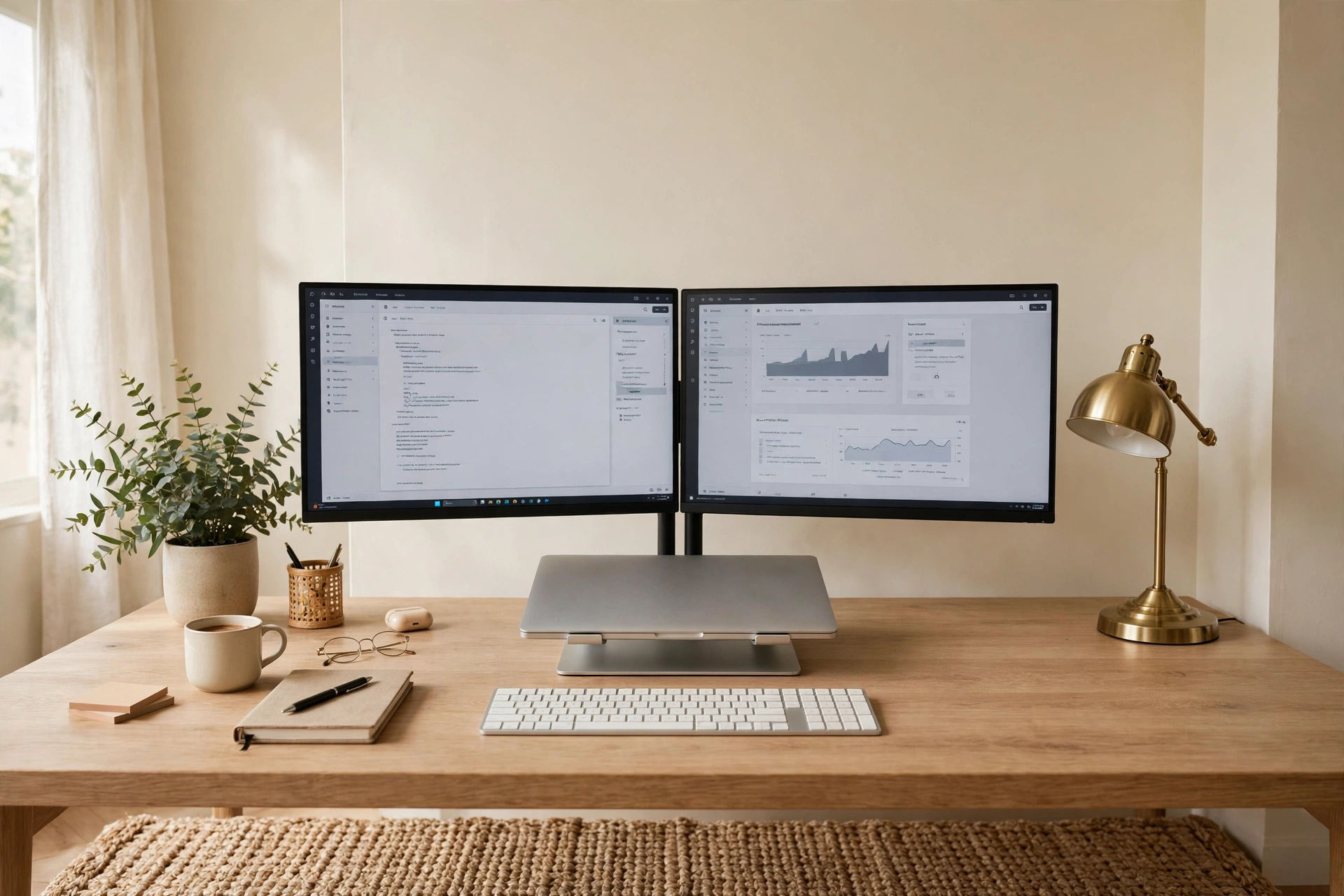
Two screens change how you work, because research stays open on one side while you write on the other. Mount both monitors on a single arm so the desk surface stays clear, and set the tops of the screens at eye level to protect your neck. Match the brightness and colour settings on both screens, since mismatched displays strain your eyes more than you expect.
Cable tidiness matters twice as much with two screens, so route both power cords through one tray under the desk. Keep the second screen for reference only during focused writing, and turn it off when you need deep concentration. The screens should serve your attention, not split it all day long.
Bookshelf Styling Ideas

DO:
- Clear the shelf completely and clean it before you place a single object back.
- Start with the largest items, such as a vase or a stack of books, spacing them unevenly across the shelf.
- Add a small plant or framed print between the large pieces to break up straight lines.
- Leave at least one third of the shelf empty so the display can breathe.
DON’T:
- Fill every shelf edge to edge, or the display will feel like a storage unit.
- Stack books you never read just to fill space, since real favourites tell a better story.
- Mix too many colours on one shelf, because a calm palette keeps the office focused.
- Forget to dust the shelves, since open storage shows dust faster than closed cabinets.
Shelves look best when they hold a mix of useful and beautiful things, not a row of identical decor. Books you actually read, a vase from a trip, and a plant you water weekly tell a truer story than matching ornaments. Step back and check the balance from the doorway, then move one item at a time until the shelf feels settled.
Calming Scent Station

Cost: 15 to 45 dollars for a diffuser, oils, and a tray Time: Under 30 minutes to set up a desk scent station Skill Level: Beginner, no tools needed Best Room: Home office desk corner, away from papers and screens
Scent works quietly in the background, and a gentle fragrance can signal to your brain that work time has begun. A small diffuser with lavender or cedarwood oil on a wooden tray keeps the bottles tidy and the desk dry, while a single candle adds a soft glow for evening sessions. Keep the scent light, since a strong fragrance in a small room quickly becomes a distraction.
I have noticed that a consistent morning scent helps me settle into work faster, almost like a small ritual before opening the laptop. Refresh the water daily, store oils upright in a cool spot, and switch the scent with the seasons. A calm smelling office is a small pleasure that costs very little.
Pegboard Tool Wall
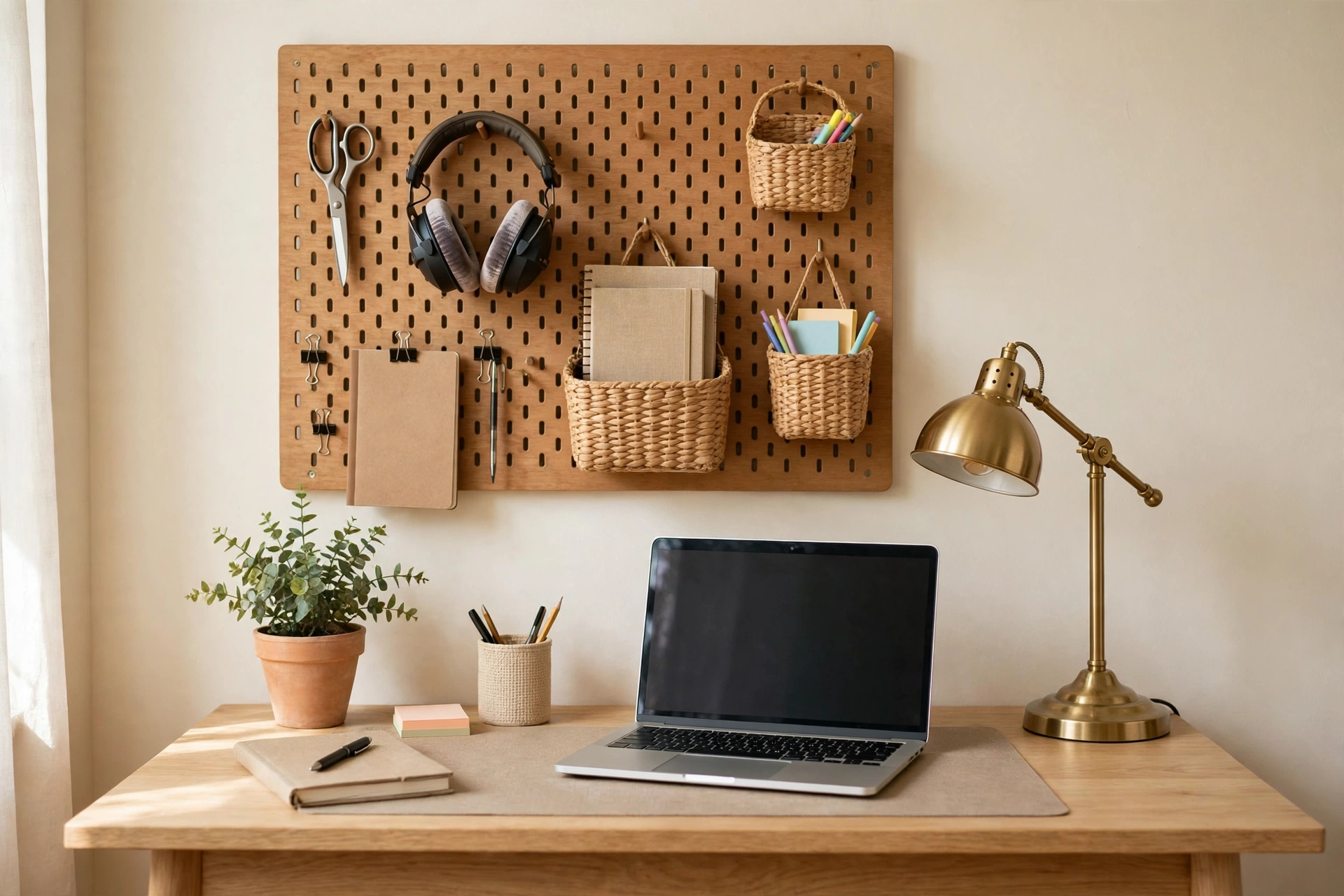
A pegboard turns a blank wall into flexible storage that changes as your work changes. Mount a wooden board above the desk, add hooks for scissors and headphones, small baskets for pens, and a shelf for notebooks you reach for daily. Everything stays visible, so you stop buying duplicates of supplies you already own but cannot find.
Keep the pegboard light and airy, with space between hooks so the wall never looks crowded. Group similar items together, hang the most used tools at arm height, and leave one empty row for future needs. A board that can grow with your projects will serve you far longer than a fixed shelf ever could.
Soft Curtain Layers

- Hang sheers on a separate slim rod behind the main drapes so each layer moves on its own.
- Let sheers fall to the floor, since short curtains chop the window visually and make the ceiling feel lower.
- Choose linen or a linen look fabric, which filters light softly without looking shiny.
- Open the heavy drapes fully during the day so the sheers do the filtering work.
- Wash sheers twice a year, since dust dulls their glow and dims the whole room.
Sheers soften harsh daylight into a gentle glow that flatters everything in the office, from your desk to your face on video calls. They also give privacy without blocking the view completely, which matters in offices facing a street. I’ve noticed that rooms with sheers feel finished even before any other decor goes in, because the windows finally look dressed.
CONCLUSION
Small changes add up to a workspace that feels calmer, brighter, and more like you, and these home office decor ideas for a stylish home prove that a beautiful office does not need a big budget or a spare room. Start with the idea that caught your eye first, whether that is better light, a comfortable chair, or a few plants by the desk, and give yourself one weekend to try it properly. Notice how the room feels when you sit down to work, then add a second idea next week. Save this guide on Pinterest so you can return to it whenever your office needs fresh inspiration, and share it with a friend who works from home too.